- info@kcih.pk
- 051-4850480 | 0339-4850480
KCIH’s Pediatric Gastroenterology & Hepatology Department in Rawalpindi treats children whose problems sit in the stomach, intestines, liver or pancreas. These are the complaints families usually live with for months before anyone finds the real cause — pait dard that keeps coming back, constipation that no syrup fixes, loose motions that will not stop, vomiting after every feed, blood in the stool, or a child who eats but simply does not gain weight. Our consultant pediatric gastroenterologist finds the cause instead of treating the same symptom again and again.
A child’s digestive system is not a small adult one. The doses are different, the causes are different, and the scopes used for endoscopy have to be sized for a baby who may weigh only a few kilograms. That is why gastroenterology in children needs a doctor with dedicated fellowship training in this field, not a general physician. At KidsCare International Hospital, Saidpur Road, Rawalpindi, our gastroenterology team works alongside pediatric surgery, radiology and the
hospital laboratory so that a child can be examined, scanned, scoped and treated under one roof.
The department also covers hepatology — liver care for children. This includes newborn jaundice that has not settled after two weeks, hepatitis A, B and C, fatty liver, chronic liver disease, portal hypertension and bleeding varices. Liver problems in children are often picked up late in Pakistan, and early diagnosis makes a very large difference to the outcome. Families in Rawalpindi
and Islamabad no longer need to travel to Lahore or Karachi to have their child properly assessed.
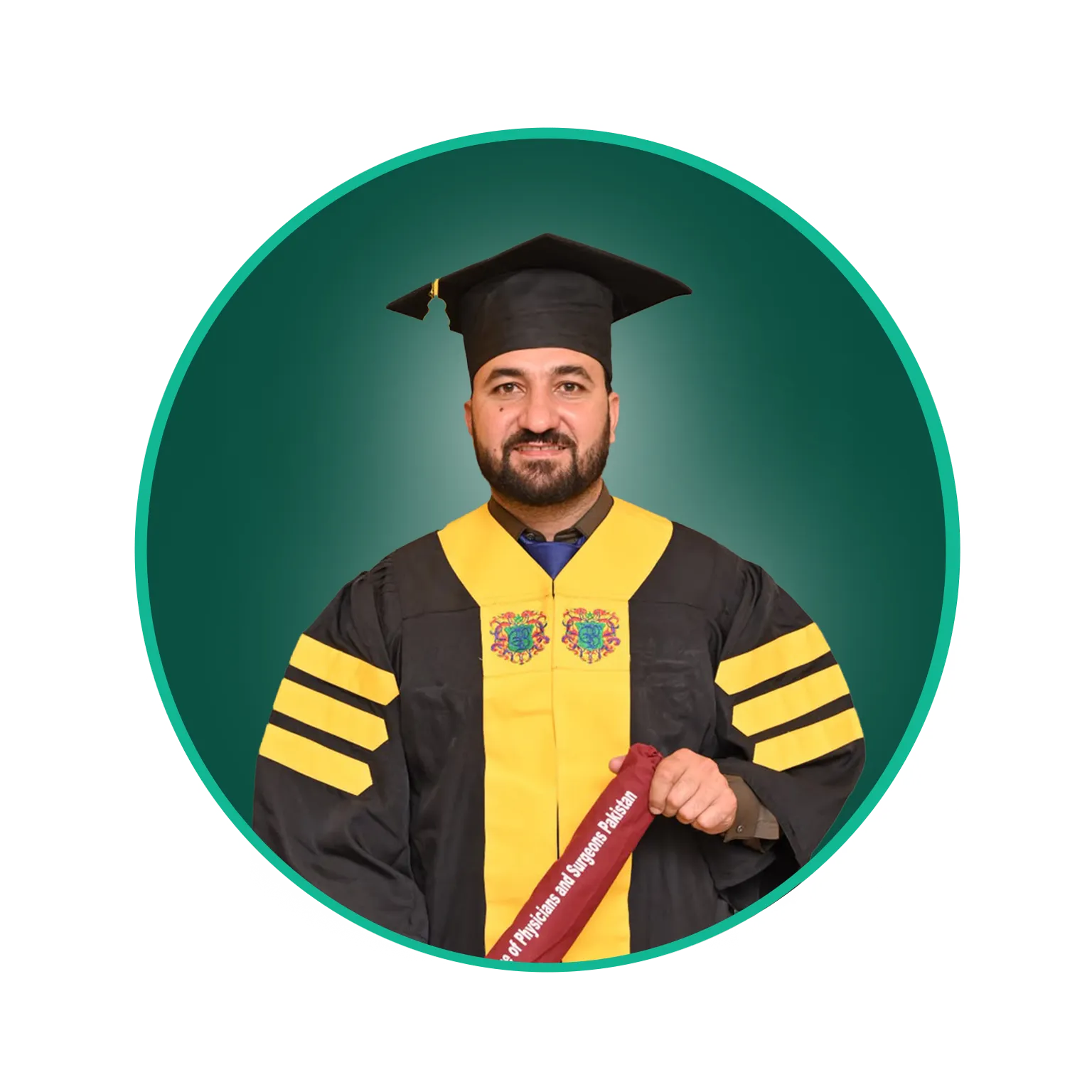
Consultant Pediatric Gastroenterologist & Hepatologist
A pediatric gastroenterologist treats problems of the stomach, intestines, liver and pancreas in children — long-lasting abdominal pain, constipation, chronic diarrhoea, acid reflux, vomiting, blood in the stool, celiac disease, inflammatory bowel disease, hepatitis, prolonged jaundice, pancreatitis and poor weight gain. They also perform endoscopy and colonoscopy in children.
A general child specialist treats all common childhood illnesses. A pediatric gastroenterologist has extra fellowship training focused only on the digestive system and liver, and is trained to perform endoscopy on children. If your child’s stomach or liver problem keeps returning, or has not improved with normal treatment, this is the specialist to see.
Yes. KCIH performs upper GI endoscopy, colonoscopy, flexible sigmoidoscopy, endoscopic biopsy and therapeutic procedures such as foreign body removal, esophageal dilatation and variceal band ligation. Child-sized scopes are used and the procedure is done in a monitored setting with PICU support available.
Yes, when it is performed by a trained pediatric gastroenterologist with equipment sized for children. The child is given appropriate sedation, is monitored throughout, and usually goes home the same day. The information gained from a scope often saves months of trial-and-error treatment.
It needs to be checked. Newborn jaundice lasting more than 14 days is not normal and can point to a liver or bile duct problem rather than ordinary newborn jaundice. Testing early matters a great deal, because some of these conditions are treatable only if caught in the first weeks of life.
If the pain has continued for more than four to six weeks, or comes with weight loss, vomiting, blood in the stool or night-time pain, book a consultation. Repeated abdominal pain in children usually has a findable cause — constipation, H. pylori infection, celiac disease, food intolerance or reflux — and it can be treated once it is identified.
Yes. Poor weight gain is one of the most common reasons children are referred here. We first look for a medical cause such as celiac disease, food intolerance, an absorption problem or a chronic infection, and then build a clinical nutrition plan the family can follow at home.